Media Log
2027
2026
2025
The effort axis
AI compresses build work unevenly. Roadmaps should separate human effort from the cost of getting a feature wrong.
Three familiar prioritization methods make room for effort:
- RICE divides reach × impact × confidence by the whole team’s effort.
- Value versus effort puts effort on one axis and expected value on the other.
- MoSCoW sorts work by necessity, then checks whether the Must Haves fit the team’s capacity.
The estimate behind those methods is changing. AI can write a first pass, repeat familiar patterns, generate tests, and revise code without a person doing each step. The change isn’t uniform: an S still costs less than an L, and partner approvals or migration risks don’t disappear. But in code-heavy work, an L and an XL can take much closer amounts of human time than their labels suggest. Keep yesterday’s sizes and you can downrank the idea with more upside for a cost that has already shrunk.
I’d rebuild prioritization around the cost of a safe attempt. Expected value still leads. Then ask how much human attention the idea needs and what a bad result would cost. Reducing every RICE effort estimate by the same proportion would leave the ranking unchanged, so the useful question is where AI changes the relative cost. The effort column should describe the work people still have to do; the cost of failure deserves a place beside it.
Could we let an agent build and ship this, have it go wrong, and still be okay? For a feature with a small blast radius, a clear success signal, and an easy rollback, I’d delegate the whole attempt to AI. Its old L or XL label should barely affect whether we try. Payments, permissions, and shared foundations are different. Mistakes there can spread and persist, so human design and review are still part of the job, meaning effort sizing can still be relevant, though the compression point can still also be true.
How to Set Goals Before Product-Market Fit
Stand-in lede. Before product-market fit, set goals on what you learn, not on numbers you can't move yet.
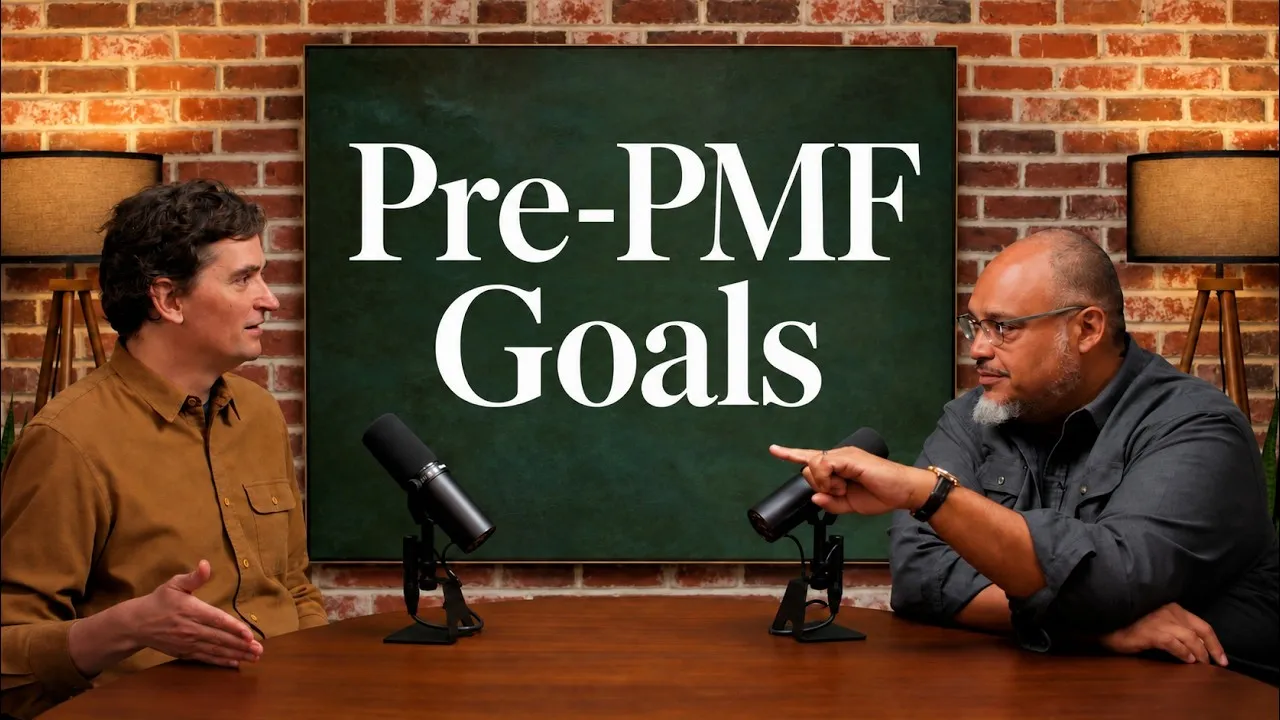
Stand-in takeaways
Before product-market fit, a revenue target is a guess wearing a number. The goal that holds up is one you control this week, like how many users you spoke to, or how many changes you shipped because of what they said.
The failure they keep coming back to is the team that sets a goal it can’t move, misses it, and learns nothing from missing it. A goal should tell you what to do on Monday.
What I’m taking from it, until outcomes are predictable, goals track learning. After that, they track outcomes.
Handmade code
Factories didn't make handmade clothing extinct. Some exquisite designer clothes are still made by hand. Maybe code will be the same.
AI code shouldn’t be slop, but it doesn’t need to beat the best engineers. If 500 software companies had equally sized teams, the top 1% of their engineers could staff only five; the other 495 still ship software people use. AI only needs to clear that bar.
Food already works this way. A frozen lasagna may not beat a chef’s, but it might beat yours. It’s cheap, fast, and good enough. People still cook when the meal matters and reach for the freezer when it doesn’t.
Software could go the same way. Payments, auth, and anything handling money or data deserve careful design. CRUD, glue, and another form component just need to work. Subpar is fine there, and AI code may not be subpar anymore.
Handmade code won’t go extinct, it’ll stay in the parts of a system where failure costs the most.